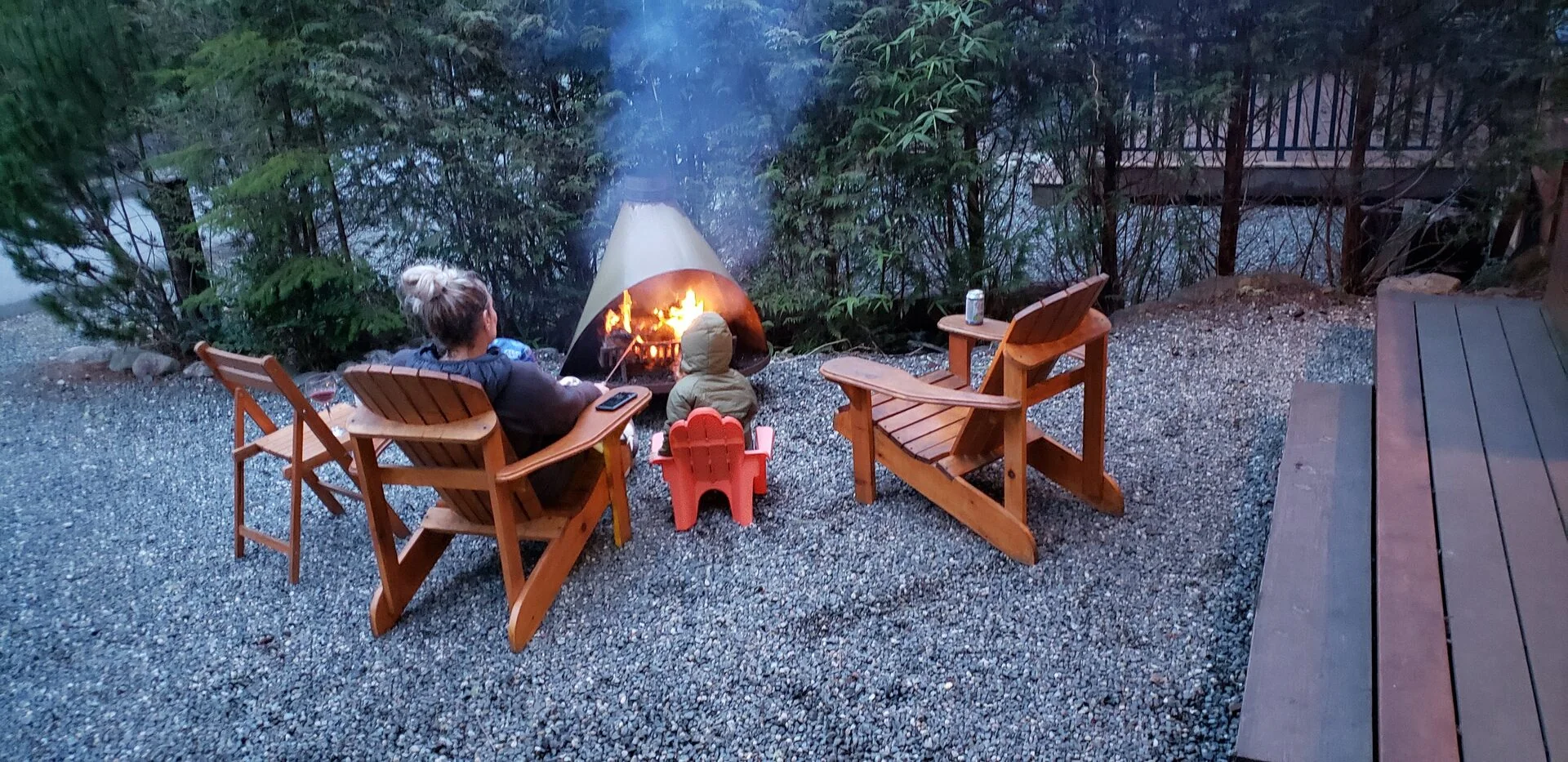

Heads up for anyone heading our way this summer: the BC Coastal Fire Centre is enacting an open fire prohibition across most of its jurisdiction — including Port Renfrew and the rest of southern Vancouver Island — starting at noon on Thursday, May 7, 2026. The ban runs through October 31 unless rescinded sooner.
Translation for guests: our outdoor fire pit at the cabin is offline for the season. The wood stove inside and the propane BBQ on the porch are unaffected — those aren't open fires under the regulation, so you can still cook outside and warm up by the stove on a cool coastal evening.
The Coastal Fire Centre covers a huge swath of the province — Vancouver Island, the Sunshine Coast, the lower mainland coast, and the central coast. The prohibition applies everywhere in that footprint except Haida Gwaii, where small Category 1 campfires are still permitted for now.
What's actually prohibited
BC categorizes open fires by size. All three categories are now banned in our region:
Prohibited until October 31, 2026
- →Category 1 — Campfires. Any open fire smaller than 0.5 metres wide and 0.5 metres tall, including backyard fire pits and beach fires. This is the one that affects the cabin's outdoor pit.
- →Category 2 — Larger open fires. Burning of grass, stubble, or piles up to 2 metres wide and 3 metres tall — typical small land-clearing fires.
- →Category 3 — Industrial open fires. Multiple piles, large land-clearing burns, and fireworks displays.
What you can still use at the cabin
The prohibition is specifically about open fires. Enclosed appliances and gas-fed devices aren't covered, so a few of our favourite cabin habits stay on the menu:
Still good to go
- →The wood stove inside. A CSA-certified appliance with a chimney — covered, contained, and outside the scope of the prohibition.
- →The propane BBQ. Gas appliances with a shut-off valve are exempt. Steaks and salmon, no problem.
- →Portable propane fire bowls. Some guests bring their own — these are usually permitted because they have a CSA-rated valve, but check the current rules at the link below before lighting one up.
Why the early ban
The Coastal Fire Centre cites public safety and the goal of reducing human-caused wildfires. After several long, dry summers in a row, the province has been pulling the trigger on bans earlier each year. Penalties for non-compliance are real: tickets start at $1,150, administrative penalties can reach $10,000, and if a fire causes damage, you can be billed for suppression costs and pursued in court.
Plan your visit
Stay at Rachael's Retreat
Wood stove, covered porch, and a propane BBQ — plenty of ways to enjoy a coastal evening, ban or no ban.
Check 2026 Availability →