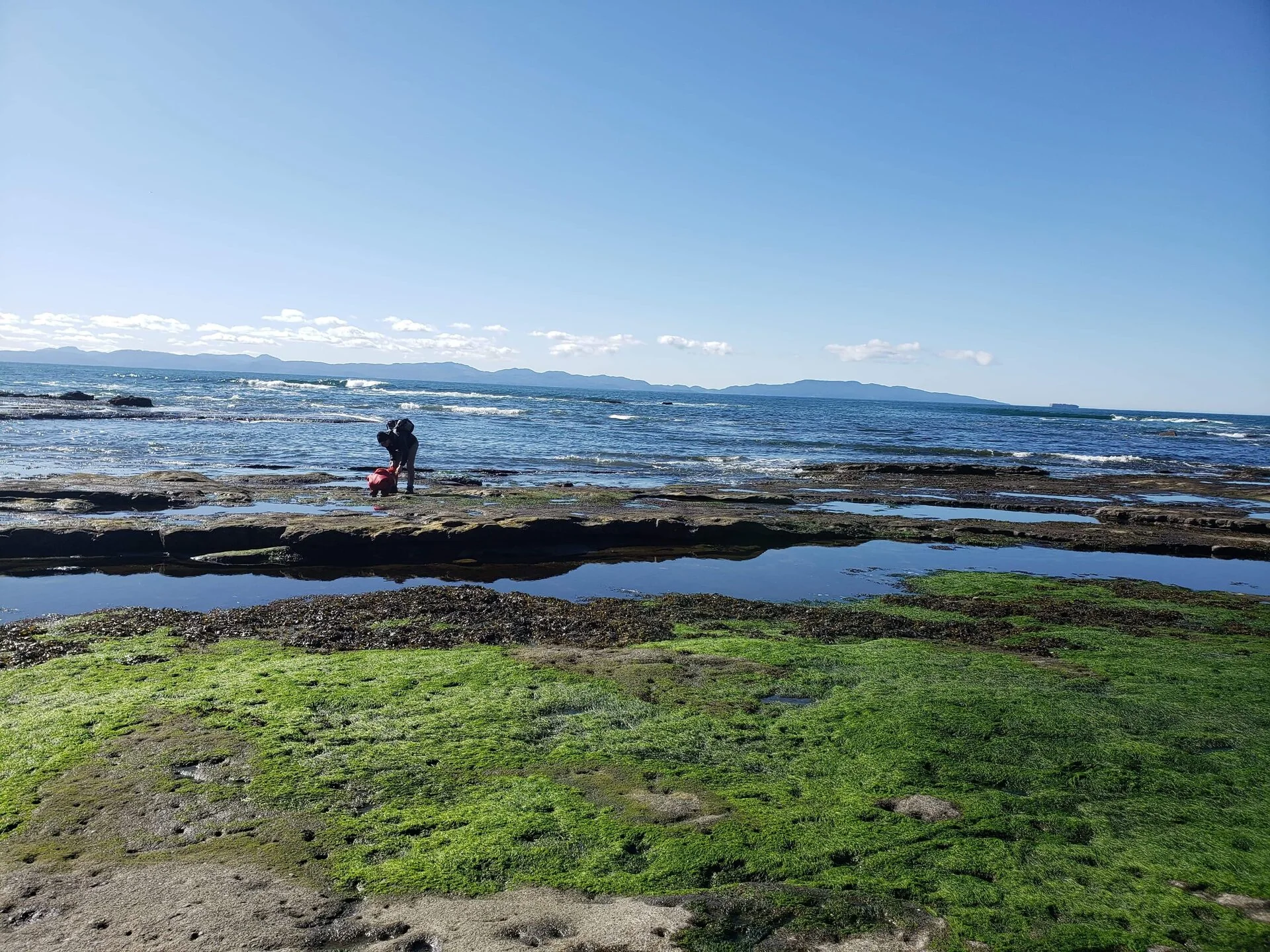
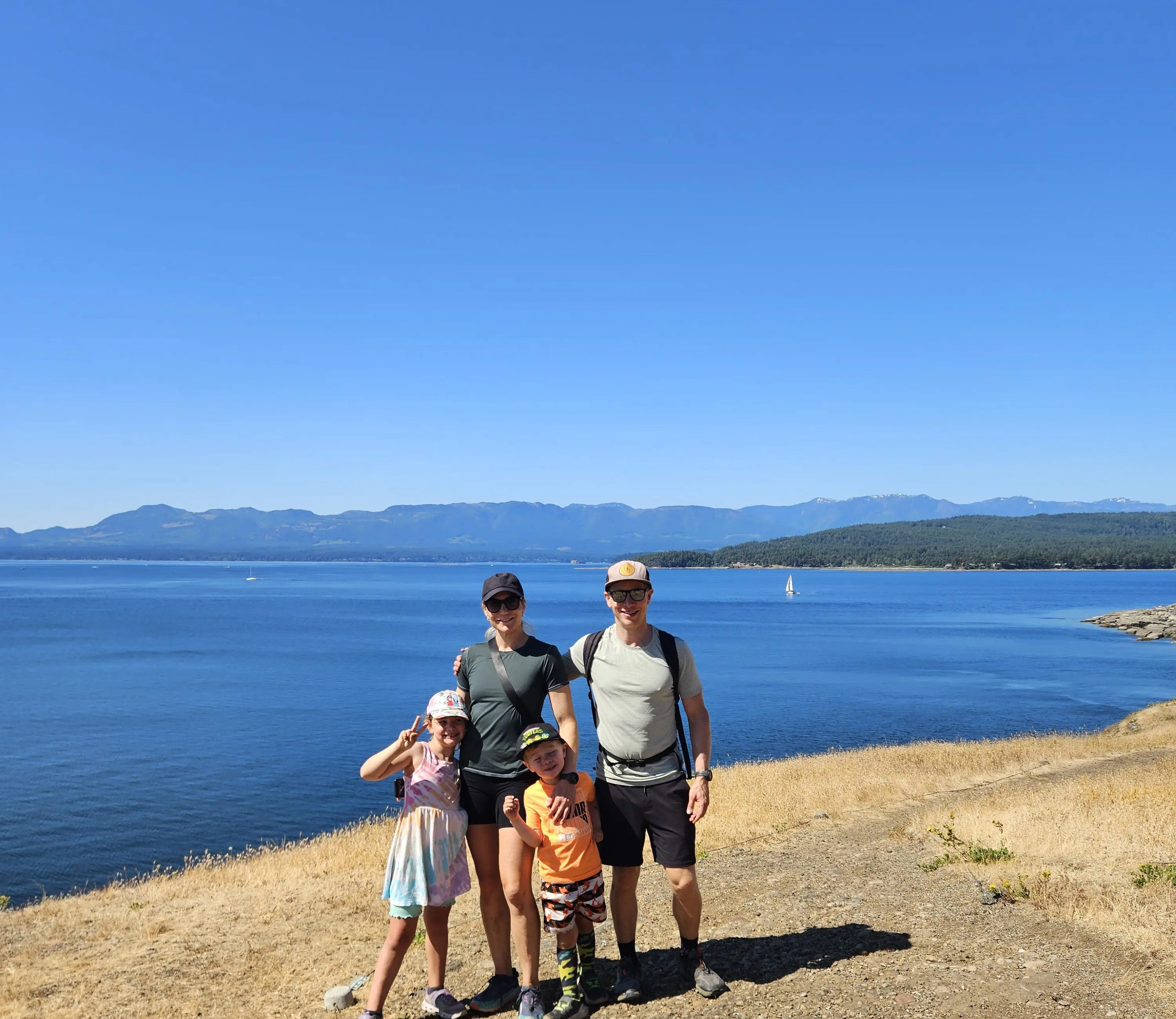
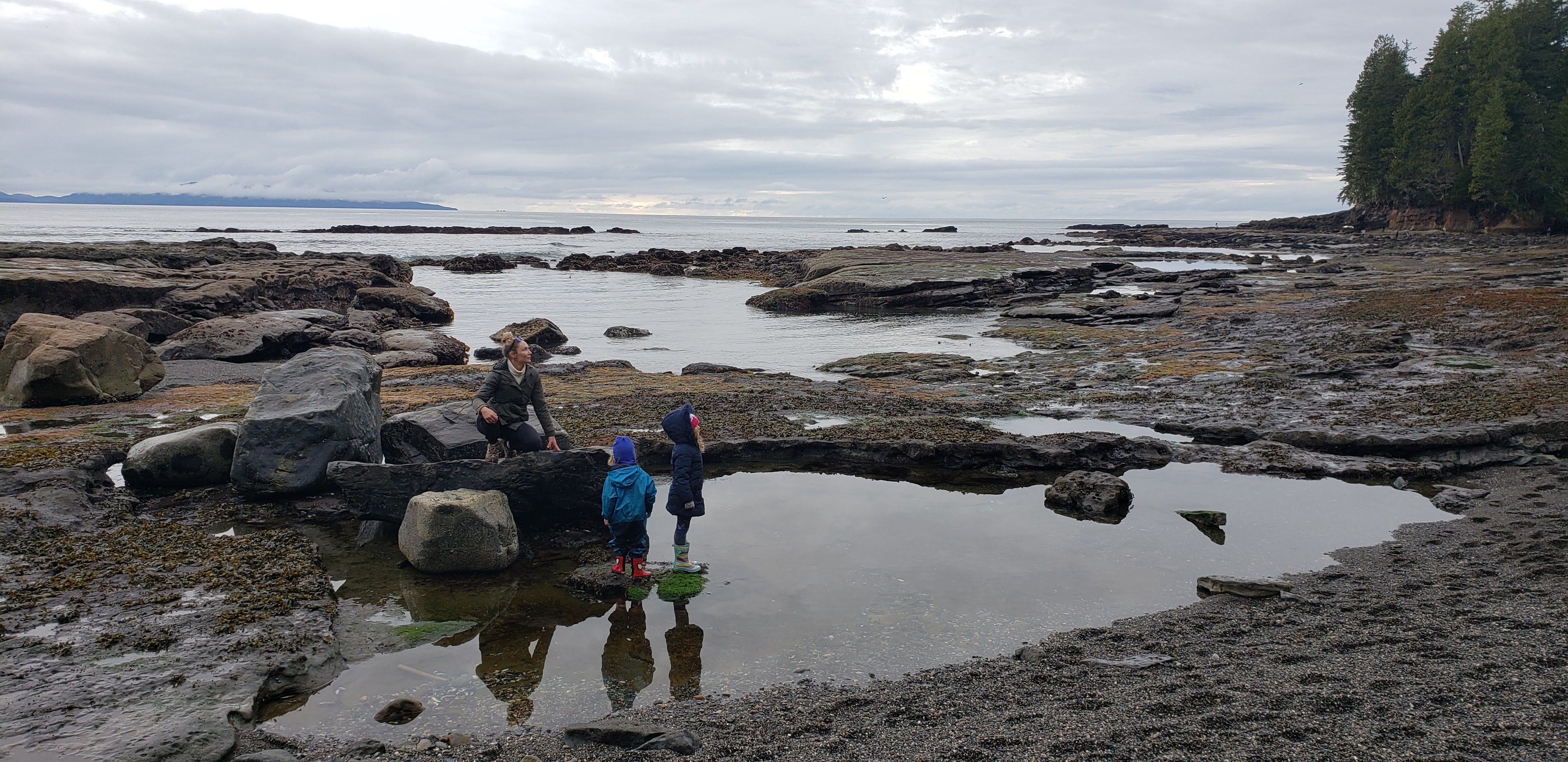
The Botanical Beach trailhead is an 8-minute drive from the cabin — then a roughly 20-minute walk down through old-growth forest to the shoreline. The tide pools that rim the sandstone point are one of the main reasons people make the trip to this stretch of Vancouver Island. The shelves hold some of the richest pools on the BC coast — purple sea urchins packed into crevices they've slowly carved themselves, ochre sea stars in amber and violet, giant green anemones, nudibranchs in colours that don't seem real.
But the experience lives and dies by the tide. Show up at the wrong time and you'll see a pretty stretch of rock. Show up during a morning minus tide in mid-June and you'll be standing in what feels like a living aquarium.
This guide covers when to visit, what you'll see, and how to use the official Port Renfrew tide tables to land on the best window for your dates.
The Official Tide Tables — Always Check Before You Go
The single most important step in planning a tide pool visit is looking up the exact low-tide time for the day you'll be in Port Renfrew. Fisheries and Oceans Canada publishes free, official predictions for Port Renfrew — updated continuously and the same source any local would use.
bookmark this
Port Renfrew Tide Tables
Official predictions from Fisheries and Oceans Canada, Station 08525. The same source we use ourselves.
How to Read the Tide Table
The Port Renfrew table shows four entries for most days — two high tides and two low tides. For tide pool viewing, the entries that matter are the low tides (the lower numbers). Here's what to target.
Reading the heights
Then check the time. A 4 AM low at 0.0m doesn't help anyone without a headlamp. You want a low tide that falls in morning daylight — anywhere between roughly 6 AM and 11 AM is workable. Mornings beat afternoons because the air is calmer, the light is gentler on the pools, and you'll have the place mostly to yourself.
Arrive at the trailhead one hour before the predicted low. The pools are most active and most exposed in the 45 minutes leading up to the low — not right at the predicted time. The walk down takes 20–25 minutes, so build that in.
April — Spring Opening
April is the soft opening of the season. Winter's biggest tides are easing off, and most years you'll find a stretch of mornings where the lows drop into Excellent territory around the spring tides. Crowds are nonexistent, the old-growth on the trail is freshly green, and the parking lot is empty.
Plan it: open the official tide table for your stay dates and look for mornings with lows at 0.5m or lower.
May — Building Season
May is underrated. The summer crowds haven't arrived, the old-growth on the trail is at its greenest, and the spring tides this month often produce some of the best windows of the year — frequently better than what midsummer offers.
Plan it: check the official tide table for the days around the new and full moon — that's when the lowest spring tides occur.
June — The Lowest Tides of the Year
If you can only make one trip to Botanical Beach all year, make it June. The year's lowest minus tides happen in June — driven by the combination of the summer solstice and the new moon — and they fall in the morning, so you get long daylight to work with and the most exposed shelf of the year.
The outer ring pools, gooseneck barnacle clusters, sea cucumbers, ochre sea stars in zones the water normally covers — all on the table during a June minus tide. Plan a sunrise drive or stay at the cabin the night before so you're on the trail well ahead of the low.
Plan it: the official tide table will show the year's lowest morning lows somewhere in June. Look for two consecutive days with 0.1–0.3m lows — that's your window, and it's worth building a stay around.
"Show up at a minus tide in mid-June and you'll be standing in what feels like a living aquarium."
July — Midsummer Reliability
July is consistent. The lows around the spring tides still drop deep into Excellent territory, the weather is at its most reliable, and the long days mean you have time to walk the loop trail before and after. Mornings are quiet — afternoons get busier with day-trippers.
Plan it: target the days around the new and full moon for the lowest tides. Check the official tide table for your specific dates.
August — The Family Sweet Spot
August is the most accessible month for families. The pools are warm, the weather is reliable, and you can usually find a low tide that lands in a kid-friendly part of the morning — not pre-dawn, not the heat of midday. The whole experience is forgiving for first-timers.
Plan it: check the official tide table for the days around the new and full moon — that's where you'll find the lowest of August's windows.
September — Quiet Season, Crisp Mornings
By September the summer crowds have thinned and the coast takes on an autumn calm. The early-month spring tides can still drop into Excellent territory, but you'll often have the shelf to yourself, frequently with mist still lifting off the old-growth trail. It's our personal favourite month.
Plan it: look at the official tide table for the days around the September new and full moon for the best windows.
Getting to the Pools — the Smart Way
Most visitors follow the main forest trail and arrive at the pools just as the tide starts coming back in. Here's how to avoid that.
The direct route
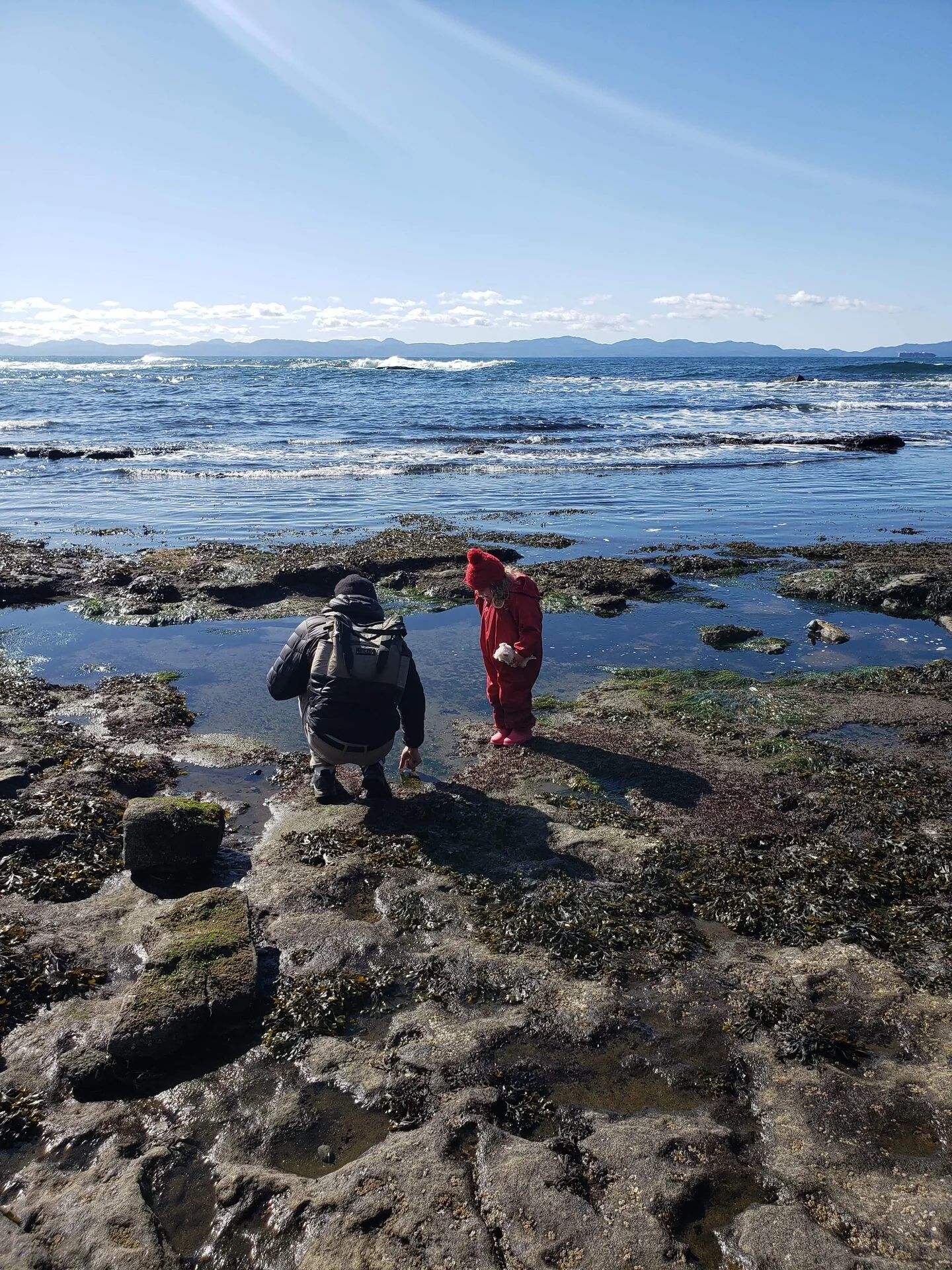
- →In the parking lot, take the path furthest from the entrance — that's the second trailhead. It's a 1km trail with a 60-metre descent to the shoreline, about 20–25 minutes going in and slightly longer on the way back up.
- →Go straight to the pools first. Once the tide turns, your window closes quickly. Save the scenic Botany Bay loop trail for the walk back.
- →Arrive one hour before the predicted low tide. The organisms are most active and most exposed in the 45 minutes leading up to the low — not right at the low itself.
- →We keep a Pacific Northwest Tide Pool Identification Guide at the cabin — useful for planning before you head out.
Safety & Stewardship
Botanical Beach is a wilderness area. The experience is worth it — so is being prepared.
Before you go
- →Never turn your back on the Pacific. Sneaker waves occur even on calm low-tide days. Stay aware of the ocean behind you at all times.
- →Wildlife awareness. Bear and cougar sightings are not uncommon in Juan de Fuca Provincial Park. Make noise on the trail and stay alert.
- →Step only on bare rock. Walking through the pools compacts sediment and crushes the microscopic life in the water. Pick your footing on the sandstone between pools.
- →No sunscreen in the water. If you've applied sunscreen, rinse your hands before touching pool water — the chemicals are toxic to the organisms living there.
- →Replace what you lift. If you turn over a rock, put it back exactly as you found it. The animals on the underside depend on those specific conditions.
- →Look, don't take. BC Parks asks that nothing be removed from the pools — not shells, not animals, not rocks.
Plan your visit
Stay at Rachael's Retreat
Eight minutes from the Botanical Beach trailhead — with the guide on the coffee table and the best tide windows laid out right here.
Check 2026 Availability →